
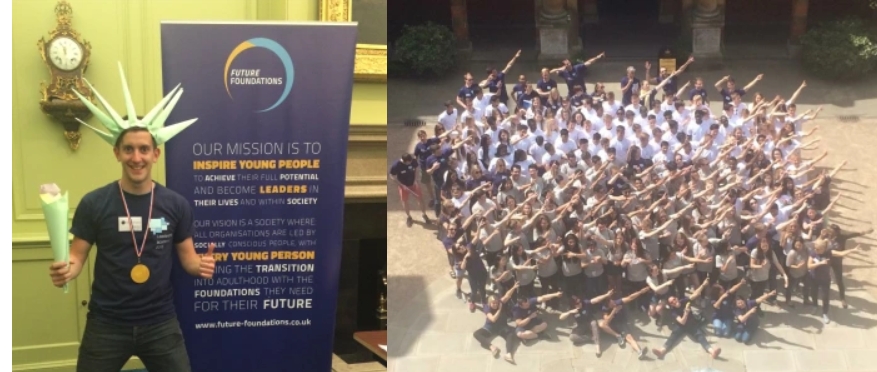
3 years in a row I’ve been involved in a contest. First year I came 2nd, second year I also came 2nd and this year I won! My over-roaring optimism eventually paid off.
Each year I get asked: “How do you do it?” “How do you make teams so creative and deliver such high quality presentations?”
This blog post is share some of the lessons I put into practice to always finish in the top 2, and this time to win.
For three years in a row, I’ve been involved in a high-energy leadership challenge.
Year one: 2nd place.
Year two: 2nd place again.
Year three: finally, victory! 🎉
My relentless optimism eventually paid off.
Each year, people ask me:
💡 “How do you do it?”
💡 “How do you make teams so creative and deliver such high-quality presentations?”
I’d love to say it’s some mystical leadership genius, but honestly? It’s about creating an environment where young people step up, get creative, and thrive.
Of course, all of us participating so enjoy winning!
Here’s how I (mostly) cracked the code.
1. Bring 10/10 Enthusiasm 🙌
Want a team to be engaged? Start by being ridiculously excited about what they’re doing.
If I show up like: “This is just a silly activity, don’t take it too seriously,” then guess what? They won’t. But if I come in with maximum energy—like I truly believe they’re about to redefine Olympic history—they feed off that energy.
Confidence grows. Ideas build. And before you know it, they’re fully invested.
2. Expect Creative Brilliance! ✨
If you expect a team to be creative, they will become more creative. I don’t ask them to be innovative—I assume they will be.
Something like: “This is an elite team. We’re here to create the most exciting, most compelling, most unforgettable Olympic bid this competition has ever seen.”
Do they buy into it? 100%.
Do they sometimes think I’m exaggerating? Also yes.
But by framing them as high-achievers, they start acting like high-achievers.
3. Set Ground Rules for Speed & Creativity ⏳
With only two hours, there’s no time for warm-up exercises or overthinking. So I lay down three simple rules:
✨ Speed over perfection – Just get ideas out there. No debating for hours.
✨ Support every idea – No “bad ideas,” only evolving ideas.
✨ Have fun – If we’re not laughing while we’re making, we’re doing it wrong.
This creates psychological safety, letting them be bold and creative without fear of looking silly.
4. Get It Down on Paper—Fast 🚀
The first 10 minutes are pure brainstorming fun and slight chaos.
“Write every idea down. Big, small, weird, brilliant—it all goes on the page.”
This ensures:
✅ No one gets stuck overthinking.
✅ Every team member has input.
✅ We see unexpected ideas emerge.
At this stage, quantity > quality—we’ll refine later.
As a leader of facilitator, this is where you role model active listening, encouragement and intervene if people are quashing ideas.
5. Divide and Conquer: The Two Essential Teams 🌠🌠
After the initial creative phase, we split into two groups:
- Creative Magic – Responsible for the wow factor. How will we make this engaging, entertaining, and fun? (Think props, humor, dramatic entrances, or interpretative dance if they’re feeling bold.)
- Idea Credibility – Focusing on actual reasoning. Why should their country host the Olympics? What makes the bid convincing?
🔑 The Secret Sauce: Someone assuming an oversight role and steps up as the “big picture” leader—the one who ties everything together and keeps the team on track.
At this point, I strategically step back, letting them self-organize and find their own leadership moments.
(Yes, I could micro-manage them into oblivion, but that wouldn’t be very “leadership development,” would it?)
6. The Power of Rehearsal (Even When They Think They Don’t Need It)
Once the bid is 70% figured out, I push for a run-through.
🤹♂️ First rehearsal = figuring out content.
🎤 Second rehearsal = boosting confidence.
A solid first run helps them spot:
🔹 Weak arguments
🔹 Confusing sections
🔹 Opportunities to elevate performance
A second run-through? That’s where the magic happens.
They loosen up. They speak with more passion. They start owning their presentation.
The transformation between rehearsal one and the final performance is always incredible to watch.
Balance Fun with Fact

Every year, I’ve seen teams deliver spectacular presentations. One year, Team India staged an epic entrance—a young girl playing Gandhi on a human elephant made of teammates. Another year, Team Italy paraded in with the Pope leading legendary Italian icons. They had drama, humor, music, props, costumes—and they absolutely owned the room.
But they didn’t win.
Why?
Because a winning team needs more than just entertainment—they need credibility. This year, my team nailed both. We had all the energy, humor, and creativity… but backed it up with solid, logical arguments.
That mix? Unbeatable.
Final Thoughts
Sure, I joke about winning—but really, the best part of this challenge isn’t the victory.
It’s seeing young people step up. Watching confidence build. Seeing them go from nervous whispers to owning the stage.
That’s real leadership. It’s not about controlling every step. It’s about creating the right environment—where people feel supported, empowered, and encouraged to take risks.
So if you’re leading a team—whether it’s a hackathon, innovation sprint, or creative project—remember:
✅ Set the tone with excitement & confidence
✅ Assume creativity & success from the start
✅ Give people space to contribute & lead
✅ Balance creativity with credibility
✅ And most importantly… have fun with it!
Good luck with your next challenge! 🚀
Related Posts
Andy’s 7 Step Guide To Running Hackathons
Introduction Thirteen years ago, I ran into my very first hackathon at the Global Service Jam in Newcastle, 2012. I…

Bringing Leadership to Life: The Power of Creative Profiles
As part of a recent consultancy project, I had the privilege of helping an organization build a stronger global leadership community. With hundreds of leaders…
Life Beat Course in Creative Facilitation
Expanding My Facilitation Toolkit Through Play, Creativity & Connection At the end of 2024, I lept into the world of LIFEbeat, many years…