

Public speaking is one of the most common fears—studies show that as much as 77% of people experience anxiety about speaking in front of an audience. And it makes sense. We worry about being judged, stumbling over our words, or forgetting what to say. Our brains perceive public speaking as a high-stakes situation, triggering that familiar fight-or-flight response.
I’ve been speaking—leading workshops, keynotes, and seminars—for over a decade now. But if you think I started out as a natural, you’d be wrong.
Back in school, I had a stutter. The thought of presenting made my stomach turn. Even now, after years of experience, I still get nervous before stepping in front of an audience.
The difference? I’ve learned how to work with those nerves instead of against them.
Confidence isn’t about never feeling anxious—it’s about knowing I can handle it. If speaking in front of a crowd makes you uneasy, you’re not alone. The good news? You don’t have to stay stuck in that feeling.
Here’s what helps me shift my mindset before a big talk or event.
“One important key to success is self-confidence.
And one important key to self-confidence is preparation.” – Arthur Ashe
1. Build On Previous Experience
Whilst each experience will be different, there are many elements that are transferrable. Confidence is built, one experience at a time. Every time I’ve led meeting, shared an idea, or navigated a tough conversation, I’ve added another “win” to my experience foundation.
I sometimes think of confidence like a table. The top of the table represents the reason I’m giving the talk—the purpose behind what I’m sharing. The legs of the table? Those are my previous experiences, the moments where I’ve spoken well, connected with an audience, or handled a tough situation with confidence.
The legs hold up the surface, just like our beliefs and core memories hold us up. Without them, the table wobbles. But when I can clearly see what’s supporting me, I trust that I can stand strong. So, when nerves creep in, I remind myself: “I’ve done this before.”

2. Know My Material
One of the biggest confidence killers is uncertainty. If I don’t feel prepared, imposter syndrome sneaks in fast. The best way I fight that? I rehearse and prepare.
Not just once. Not just in my head. On paper, with images. Out loud, standing up. I imagine my audience in front of me. I’m not the kind of presenter or facilitator that will read word for word. But key messages and key points, I will practice to ensure they land.
I figure out how to say it in a way that feels natural to me. The more familiar I am with my material, the more at ease I feel. I remind myself: “I know this.”
3. See Nerves as Insight
Instead of fighting nervous energy, I try to use it. Anxiety isn’t the enemy—it’s just my body telling me that this moment matters. I care. It’s important to me that I do well, add value and make a positive difference.
When I feel nerves kick in beyond a reasonable level, I ask myself: Why am I nervous?
- A new audience? A bigger stage? A different industry? That’s growth.
- Haven’t done this in a while? That’s just a reminder to warm up.
- Putting too much pressure on myself? That’s a chance to focus on connection over perfection.
- Feeling unprepared? That’s a sign to rehearse more.
Instead of seeing nerves as a problem, I treat them as feedback. I remind myself: “I can channel this into preparation.”
4. Create a Pre-Talk Routine
Great speakers, athletes, and performers don’t just wing it—they have pre-performance routines that get them into the right mindset.

For me, once I’ve prepared the content and the setup, I take a few deep breaths. Sometimes, I’ll listen to music that gets me into the right headspace. Other times, I’ll step into a quiet spot and visualise the moment—imagining myself speaking with ease, connecting with the audience, and feeling at home on stage. Other times, I’ll go full Amy Cuddy and Power Pose my way to feeling good!
I remind myself: “I’m as ready as I can be in this moment. I’m ready.”
5. Shift the Focus: It’s Not About Me
Nerves often come from over-focusing on myself—how I look, how I sound, what people will think. But great speakers focus on the audience.
Before I step on stage, I ask myself:
- Why am I here? What’s the purpose?
- How can I make this valuable for them?
- How can I connect in a real and authentic way?
- How can I make this engaging, inspiring, or useful?
When I shift my attention from me to them, my anxiety starts to fade, and presence takes its place. I remind myself: “This is about them, not me.”
6. Enjoy the Moment
In final moments? It’s go time. Enough over-thinking.
The work is done. The preparation is behind me. The audience is waiting. I’m here for a reason.
I step up. I breathe deep. I trust myself. I say something like: “Let’s do this.”
Final Thoughts
Public speaking is a skill—one that anyone can improve. I went from a nervous kid with a stutter to leading keynotes for hundreds of people. If I can do it, so can you.
The key? Preparation, mindset, and remembering that it’s not about being perfect—it’s about making a connection.
So, take a deep breath. Trust yourself. And go for it.
You’ve got this!
Related Posts
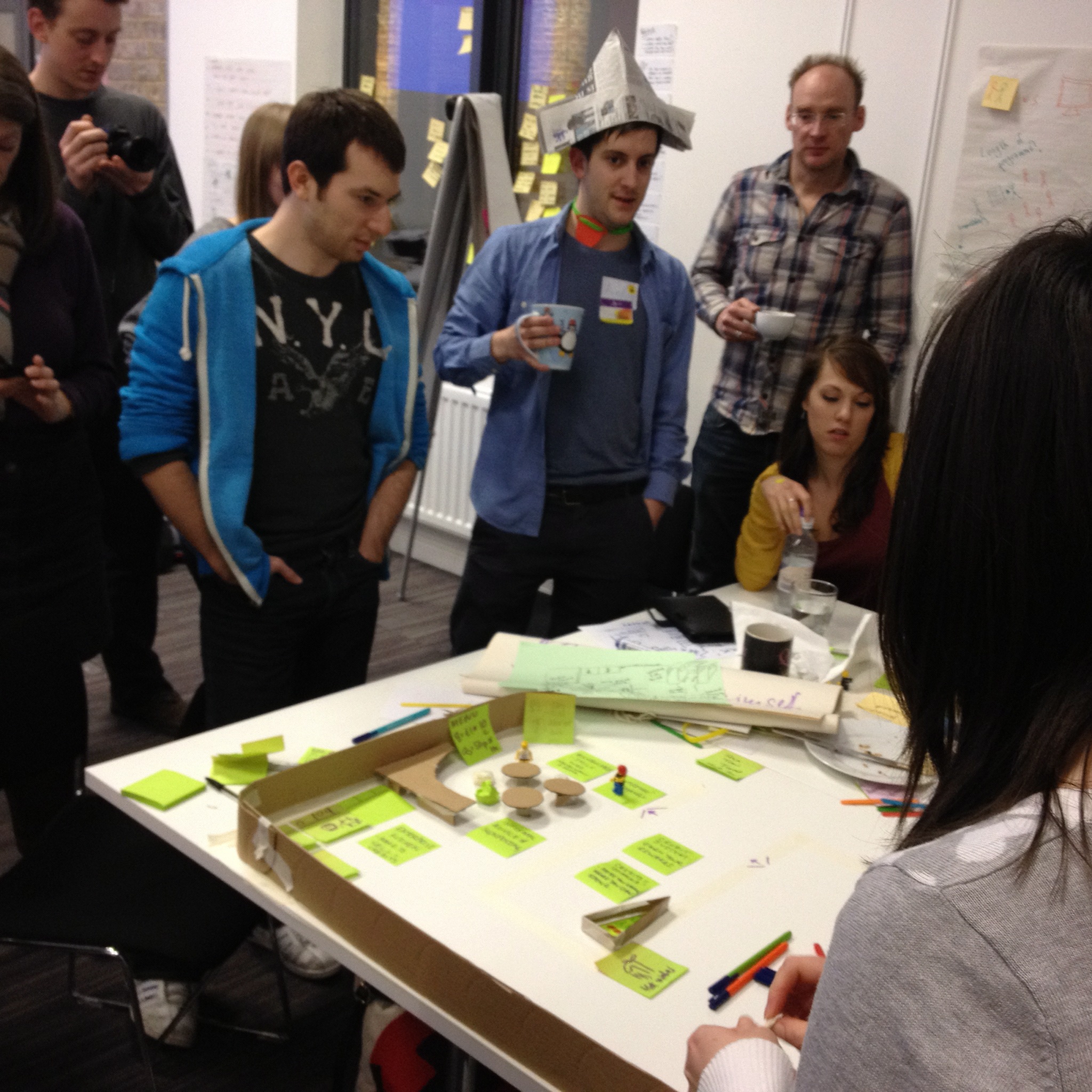
Andy’s 7 Step Guide To Running Hackathons
Introduction Thirteen years ago, I ran into my very first hackathon at the Global Service Jam in Newcastle, 2012. I…

Bringing Leadership to Life: The Power of Creative Profiles
As part of a recent consultancy project, I had the privilege of helping an organization build a stronger global leadership community. With hundreds of leaders…

Life Beat Course in Creative Facilitation
Expanding My Facilitation Toolkit Through Play, Creativity & Connection At the end of 2024, I lept into the world of LIFEbeat, many years…